

The Same Microphone, But Different: Commentary vs Reports
People often assume reporting is just easier commentary. The reality is, they’re almost opposite jobs.

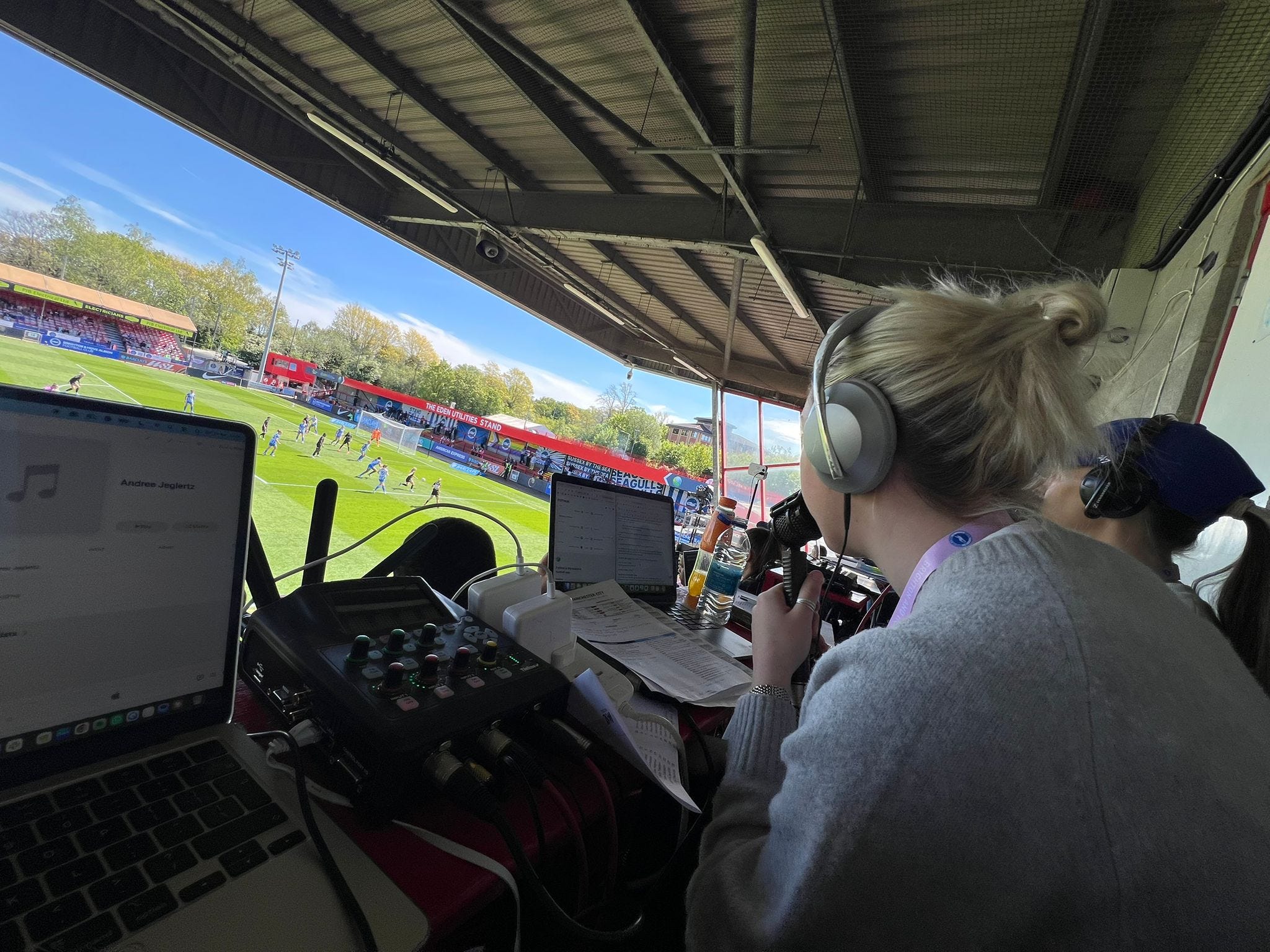
Every now and then, someone messages me saying, “I loved your commentary on 5 Live.” Sometimes they’re right. Sometimes what they’ve actually heard is me reporting. It’s an easy mistake to make. To most people, I’m standing at a football match with a headset on, talking into a microphone, so surely, it’s all commentary...
Except it isn’t.
The biggest misconception is that reporting is just “less commentary.” It isn’t. They’re almost opposite skills. Reporting is about delivering the information as quickly and clearly as possible. Commentary is about taking your time, building a picture and letting the game breathe. One asks, “What’s happened?” The other asks, “What did it feel like?”
That usually surprises people. Commentary is exactly what you’d imagine. You’re responsible for taking people through the entire story of a football match, from kick-off to full-time. You’re building drama, creating atmosphere, describing goals and helping people understand not just what’s happening, but why it matters.
Reporting is a completely different challenge. Instead of ninety minutes, you’ve got about ten. Not ten minutes. Ten seconds. Imagine someone hands you a football match and says, “Right, tell everyone everything they need to know… now.” That’s reporting. You’ve got to work out what’s important, explain it clearly and get back out before the presenter moves on. There isn’t time to overthink your wording. Every single word has a job to do.
Being able to switch between those mindsets in the space of twenty-four hours, as well as sometimes between radio and TV, is one of the biggest challenges, and one of my favourite parts of the job. One constantly makes the other better.
Before a commentary, my preparation usually starts days before kick-off. I’ll read everything I can. Recent form, injuries, manager quotes, head-to-head records, player milestones, pronunciations, tactical trends, etc. If someone has changed their surname, I’ll know about it. If a full back is about to make their 100th appearance, it’s highlighted. If a striker hasn’t scored in eight games, it’s probably written somewhere in the margin. By the time I arrive at the ground, I’ve usually got pages of notes spread across my desk.
Will I use all of them? Absolutely not. Probably less than half, maybe even less than three-quarters. But commentary preparation isn’t about trying to memorise everything. It’s about giving yourself the confidence to know that, whatever happens, you’ve got the information if you need it. It’s a bit like revising for an exam. You rarely get asked every question you prepared for, but you’re very glad you revised anyway. (I will be going into my notes in more detail in the coming weeks).
Reporting couldn’t be more different. Of course, you still prepare. You’d never walk into a stadium blind. But instead of preparing to tell the whole story, you’re preparing to identify the headline. If commentary is writing the whole book, reporting is trying to explain the best chapter before someone closes it. That’s a completely different skill. One I’ve probably found harder to learn.
As a commentator, you’ve got time to let moments breathe. You can build anticipation before a corner, explain why a substitution matters or allow the atmosphere inside the stadium to tell part of the story for you. As a reporter, there isn’t that luxury. You’re waiting for your cue, listening to the presenter, keeping an eye on the match, making notes and knowing that at any moment you might hear your name in your headset:
“Emily... stand by.”
Three words that immediately make your brain start working overtime. You quickly decide what you’re going to say, how you’re going to say it and what information absolutely has to make it into those few precious seconds.
Then you hear:
“Emily is at The Den…”
And unlike commentary, where you’re building a narrative over ninety minutes, reporting asks you to distil everything into one clean, concise update. It’s amazing how difficult ten seconds can be. You learn to identify the headline before you’ve even finished writing the sentence in your head. And are taught to follow this structure: Score, who has scored, context, score. The middle bits sometimes can tie in together and you can play around with it, but you MUST under all cirmcumstances start and end on the score. In every report, you’ll hopefully hear that structure. I owe a lot of that to Rob Nothman, who once sat down with me at Loftus Road and patiently helped me fine-tune the craft.
Then, when you sit down to commentate a full ninety minutes, you take those same instincts with you. You know which moments deserve more time. You know when to slow down. You know when silence says more than another sentence ever could. It’s easy to think commentary is about talking. In reality, it’s about listening, listening to the game and listening to the atmosphere and listening to your co-commentator. And, sometimes, listening to yourself and realising you don’t actually need to say anything at all.
Some of my favourite commentary moments have been the ones where the crowd has done the talking for me. A sudden death penalty, when Charlton women were promoted to the top flight. A huge save when Lize Kop kept Tottenham in the FA Cup. A trophy lift. Sometimes the best thing you can do is get out of the way and let people at home feel like they’re in the stadium.
The funny thing is that I still don’t think there’s a “better” job. They’re just different. Commentary lets me tell the whole story. Reporting teaches me which parts of the story matter most. I honestly think I’m a better commentator because I report, and a better reporter because I commentate.